2026-10-22 ·
Local Challenges Removing Spray Foam Near Plymouth's Coast
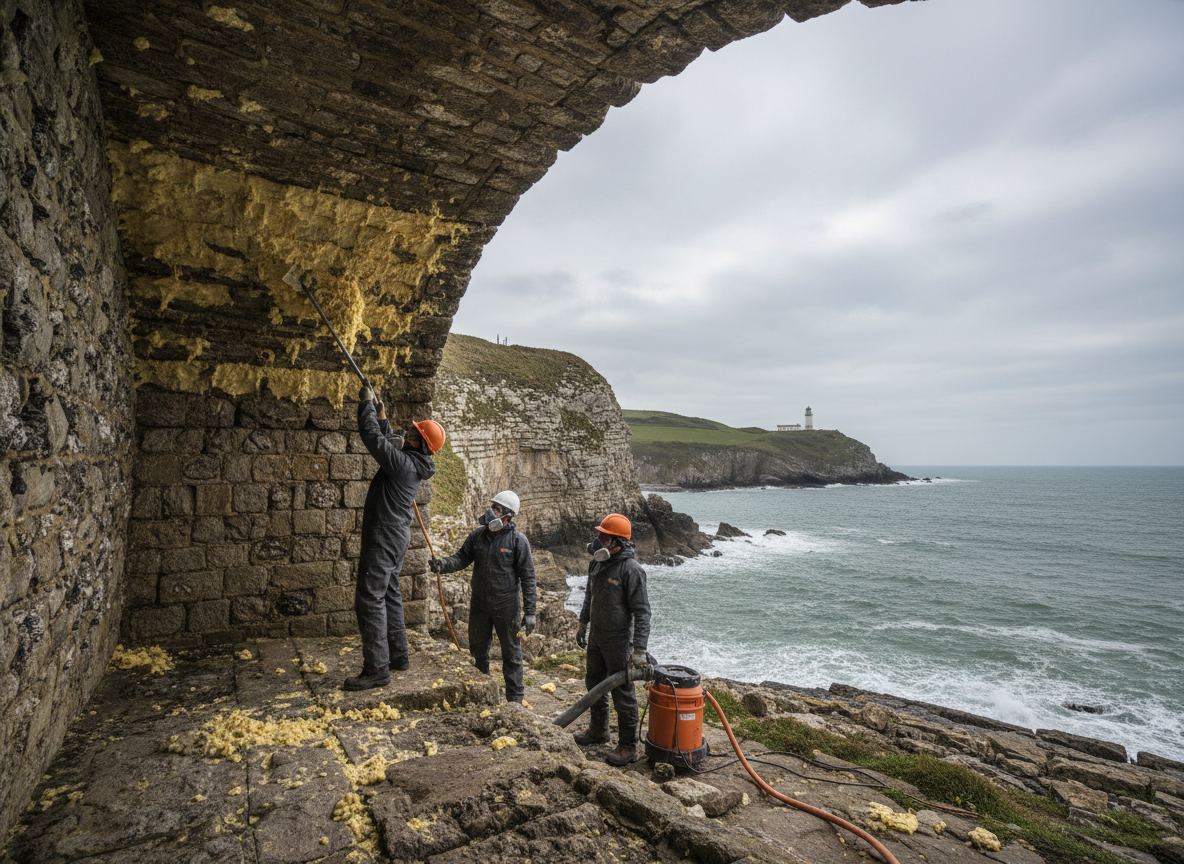
Coastal exposure in Plymouth adds layers of difficulty to spray foam removal that inland jobs rarely encounter. Salt-laden air speeds foam degradation while trapped moisture in lofts of older stone and timber homes increases rot risk during extraction. Properties near the Barbican and Devonport often need extra containment to prevent salt crystals from contaminating interior spaces.
Salt Air Acceleration of Foam Breakdown
Plymouth's position on the southwest coast means prevailing winds carry sea salt inland daily. This salt penetrates closed-cell foam in lofts of Edwardian terraces along Mutley Plain and around the Hoe, causing the material to become brittle within 8–12 years rather than the longer lifespan seen further inland. When removal crews cut or scrape the foam, the salt crystals loosen and scatter, requiring negative-air machines and sealed chutes to protect remaining insulation and timber joists. Homeowners in these neighborhoods frequently report visible white residue on rafters after initial attempts at DIY removal, which then demands a second pass with dry ice blasting to reach embedded pockets without gouging historic lath and plaster ceilings.
Moisture and Humidity Challenges in Coastal Lofts
High annual rainfall combined with salt spray creates persistent damp conditions inside roof voids of Plymouth homes built before 1930. In areas such as Keyham and St Budeaux, condensation forms on the underside of slate roofs during mild winters, softening spray foam adhesion and allowing water to pool against wall plates. Removal teams must first assess moisture levels with pin meters before starting work; otherwise, disturbing saturated foam can release hidden mold spores into living spaces below. Crews working from the 32 Mayflower St base routinely install temporary ridge vents during multi-day projects to equalize pressure and reduce further condensation while the loft is open.
Housing Stock Realities in Plymouth Terraces
Many properties around Plymouth's naval dockyards feature narrow roof voids with limited access hatches and mixed insulation layers added over decades. Removing foam from these tight spaces without damaging original timber trusses or asbestos-containing artex ceilings requires incremental sectioning rather than bulk pulling. Stonehouse and Ford residents often face additional complications when foam has migrated into cavity walls during previous installations, necessitating targeted insulation assessment before any extraction begins. The compact street layout also limits equipment staging, so teams schedule early morning deliveries to avoid blocking narrow lanes used by local residents.
Practical Sequencing for Coastal Projects
Successful removal near Plymouth's coast follows a strict order: first isolate the work area with plastic sheeting sealed to joists, then use dry ice blasting on the most degraded sections to minimize dust, followed by hand scraping of remaining residue. After extraction, crews apply borate treatments to exposed timber to counter salt-induced corrosion before reinstalling ventilation. Readers planning sales can review timing considerations in the guide When to Schedule Spray Foam Removal Before Selling in Plymouth and the step-by-step Devon process outlined at Step-by-Step Guide to Removing Spray Foam from Devon Attics. This sequence keeps projects contained within typical 3–5 day windows even when weather windows are short.