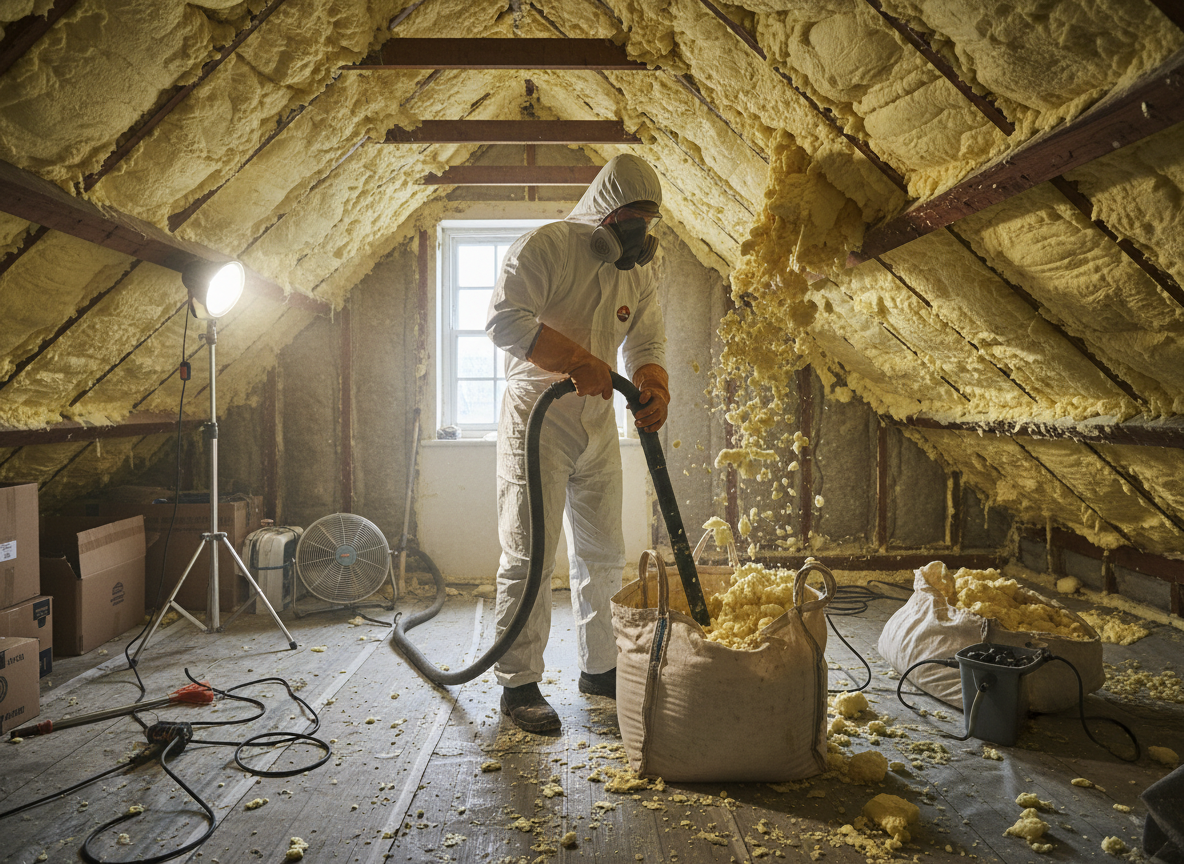
Plymouth's Victorian terraces and 1950s council estates often have spray foam applied directly to rafters in lofts that were never designed for it. Over time the foam traps moisture from the area's frequent Atlantic rain and poor ventilation, leading to timber decay and reduced airflow. Removing it requires cutting back to the original roof structure without damaging felt or battens that have already been stressed by decades of salt-laden wind.
Homeowners in areas like Mutley and Devonport frequently discover the foam has bonded to electrical cables and pipework during earlier retrofits. We isolate these services first, then use controlled mechanical removal followed by thorough vacuum extraction to clear residue that can otherwise cause new condensation spots once the loft is reopened. Local building control expects the roof to be returned to a breathable state, so we document each stage for any future inspections.
Coastal humidity in Plymouth means the job cannot be rushed in winter months when temperatures drop and rain is constant. We stage the work to keep the property weather-tight overnight, using temporary sheeting over the roof plane while foam is stripped. This prevents water ingress into bedrooms below, a common complaint when removal is attempted without proper sequencing.
Technician insight
In Plymouth, the thing that catches most people out with loft spray foam removal is how the foam has crept behind the fascia boards on Victorian terraces. Once winter rain starts driving in from the southwest, any missed sections let water track straight into the wall plate and you end up chasing rot you did not budget for.
Mutley Terrace Loft Restoration
Foam had been sprayed over rafters in a 1920s terrace and was holding moisture against the felt. We found hidden rot along the wall plate and isolated cabling before stripping. After removal and vacuuming we opened the original eaves vents and left the loft breathable again.
How it works
- 1
Site Assessment
Inspect loft structure, identify foam type and depth, check for hidden services and existing damp in Plymouth properties.
- 2
Service Isolation
Protect and isolate electrics, pipework and ventilation points before any cutting begins.
- 3
Controlled Removal
Mechanically strip foam in sections, bagging waste on site to limit dust spread through the house.
- 4
Clearance and Ventilation Check
Vacuum residue, inspect rafters for rot, and confirm airflow paths are restored before handover.
Pricing
Cost depends on loft size, foam thickness and access difficulty in older Plymouth roofs.