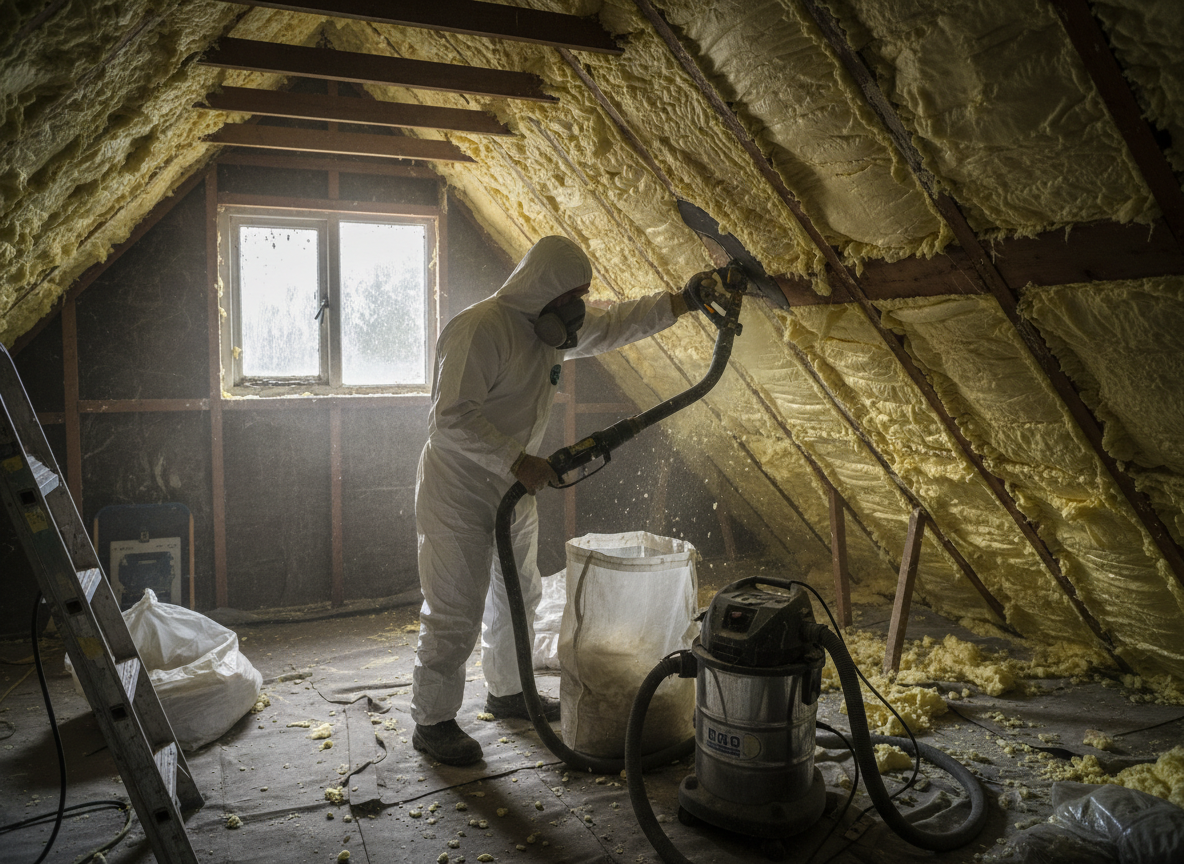
Plymouth homes often feature Victorian terraces and mid-century builds with lath and plaster ceilings or timber joists in lofts. Spray foam bonds aggressively to these surfaces, and removal must avoid disturbing original plaster or joists that have settled over decades. Coastal humidity in the Plymouth area can make foam more brittle in winter yet stickier in summer, changing the tools and pace needed on each job.
Improper removal releases isocyanates and creates fine dust that settles into floorboards and cavities common in Devonport and Mutley properties. Containment sheeting, negative air machines and HEPA filtration are required to keep the rest of the house clean. Edge cases include foam that has wicked into electrical chases or around chimney breasts, where incomplete extraction leaves hidden residue that later causes condensation problems.
Homeowners sometimes attempt DIY scraping, which damages ceilings and voids any future insulation warranty. We assess the full depth of application first, then use controlled mechanical and solvent methods suited to the substrate. All waste is bagged and removed the same day, leaving the space ready for new insulation or inspection.
Seasonal Considerations
Winter jobs in Plymouth require extra drying time after removal because indoor moisture levels rise quickly once foam is gone. Summer work allows faster turnaround but demands stricter dust control when windows are open.
Technician insight
In Plymouth, the thing that catches most people out with Residential Spray Foam Removal is how tightly the foam bonds to the original lath and plaster in pre-war terraces around Stonehouse and Keyham, especially after years of coastal damp has worked into the ceiling voids.
Loft Clearance in a Mutley Terrace
Homeowner noticed musty smells and staining on bedroom ceilings. We found closed-cell foam applied directly over original lath and plaster that had absorbed moisture from the Plymouth winter. Careful mechanical removal and dust extraction prevented further plaster damage. The loft was left clean and ready for ventilation upgrades.
How it works
- 1
Site Assessment
Walk-through of the property to map foam locations, check substrate condition and identify access points in Plymouth homes.
- 2
Containment Setup
Sealing of work zones with plastic sheeting and negative air units to prevent dust migration into living spaces.
- 3
Foam Extraction
Layer-by-layer removal using appropriate mechanical and solvent techniques matched to the age and construction of the building.
- 4
Final Clean and Disposal
HEPA vacuuming of all surfaces followed by bagged removal of waste and a final walkthrough with the homeowner.
Pricing
Upfront quotes after on-site inspection; cost varies with foam thickness, access difficulty and property age.