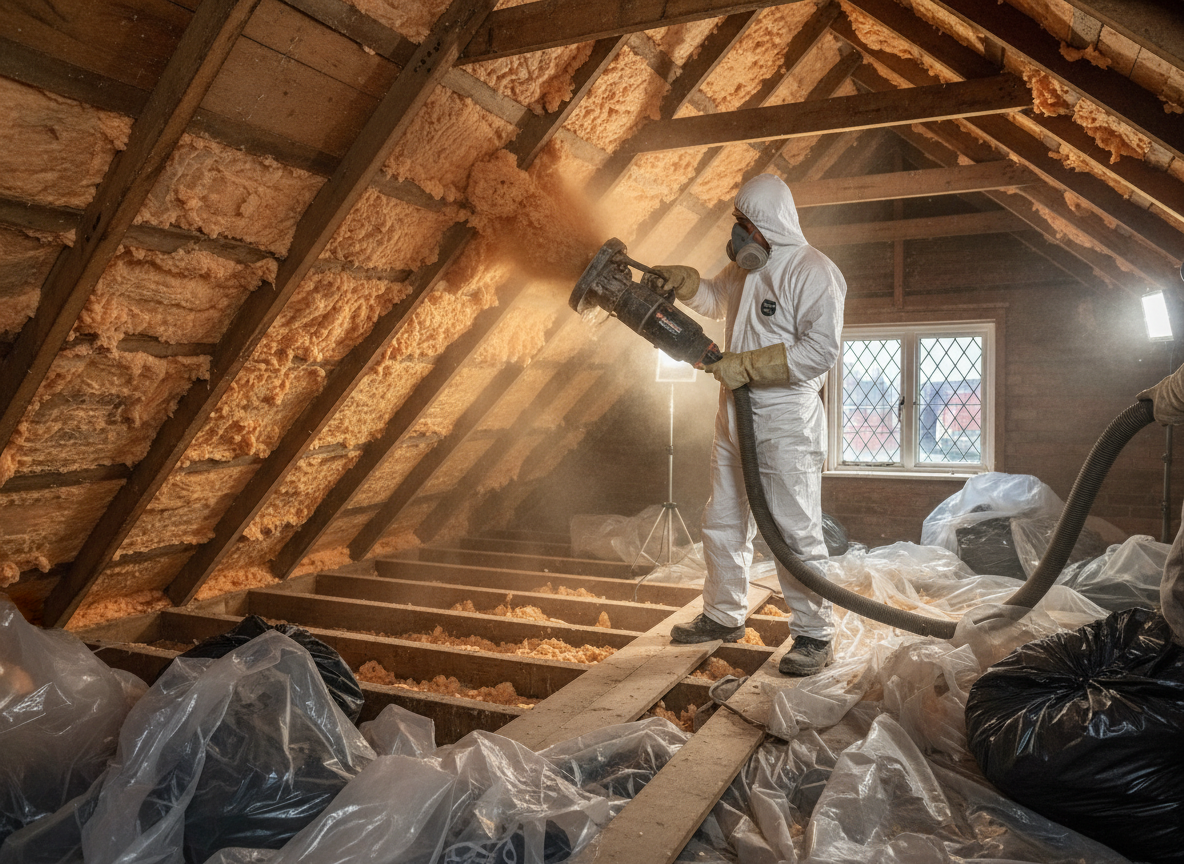
Plymouth's Victorian and Edwardian terraces in neighbourhoods like Mutley, Stoke and the Barbican frequently contain closed-cell spray foam installed to combat heat loss. Over time this traps moisture against slate roofs and timber joists, especially during the area's prolonged wet winters when salt-laden air accelerates rot. Removal requires careful mechanical stripping and negative-pressure containment to prevent foam particles migrating into living spaces below.
Edge cases common here include foam applied over original lath and plaster ceilings that have already sagged, or installations blocking the eaves ventilation that older Devon properties rely on. Attempting DIY removal often leaves residue that re-adheres during humid summers, creating hidden mould pockets. Proper extraction includes checking for asbestos in pre-1980 insulation layers and ensuring the roof void is left ventilated to current building standards.
Coastal exposure around Plymouth Hoe and Devonport means many attics suffer repeated condensation cycles that degrade foam adhesion unevenly. Technicians must map moisture levels before starting and may need to install additional ridge vents post-removal to prevent recurrence. Homeowners in terraced rows should also consider party-wall implications, as foam can migrate into adjoining properties during original installation.
Technician insight
In Plymouth the thing that catches most people out with attic spray foam removal is the tight roof voids in pre-1910 terraces around Mutley and Stoke. Our frequent heavy rain and salt air push moisture behind the foam, so you often find hidden rot that only appears once the material is stripped.
Stoke Terrace Attic Clearance
Homeowner in a 1890s Stoke terrace noticed musty smells after heavy winter rain. Inspection revealed closed-cell foam trapping condensation against the rafters. We removed the foam under containment, cleared blocked eaves and restored ventilation. The attic dried out and the smell disappeared within weeks.
How it works
- 1
Site Assessment
Inspect attic condition, measure foam depth and check for hidden moisture or asbestos in Plymouth properties.
- 2
Containment Setup
Seal the work area with plastic sheeting and negative air machines to contain dust within the roof void.
- 3
Foam Extraction
Use mechanical scrapers and vacuums to remove foam layers without damaging original timber or slate.
- 4
Ventilation Restoration
Clear eaves and install vents where needed to restore airflow suited to Devon's maritime climate.
- 5
Final Clearance
HEPA vacuum, dispose of waste and provide a written report of the cleared space.
Pricing
Cost depends on attic size, foam thickness and access difficulty; upfront quotes provided after inspection.