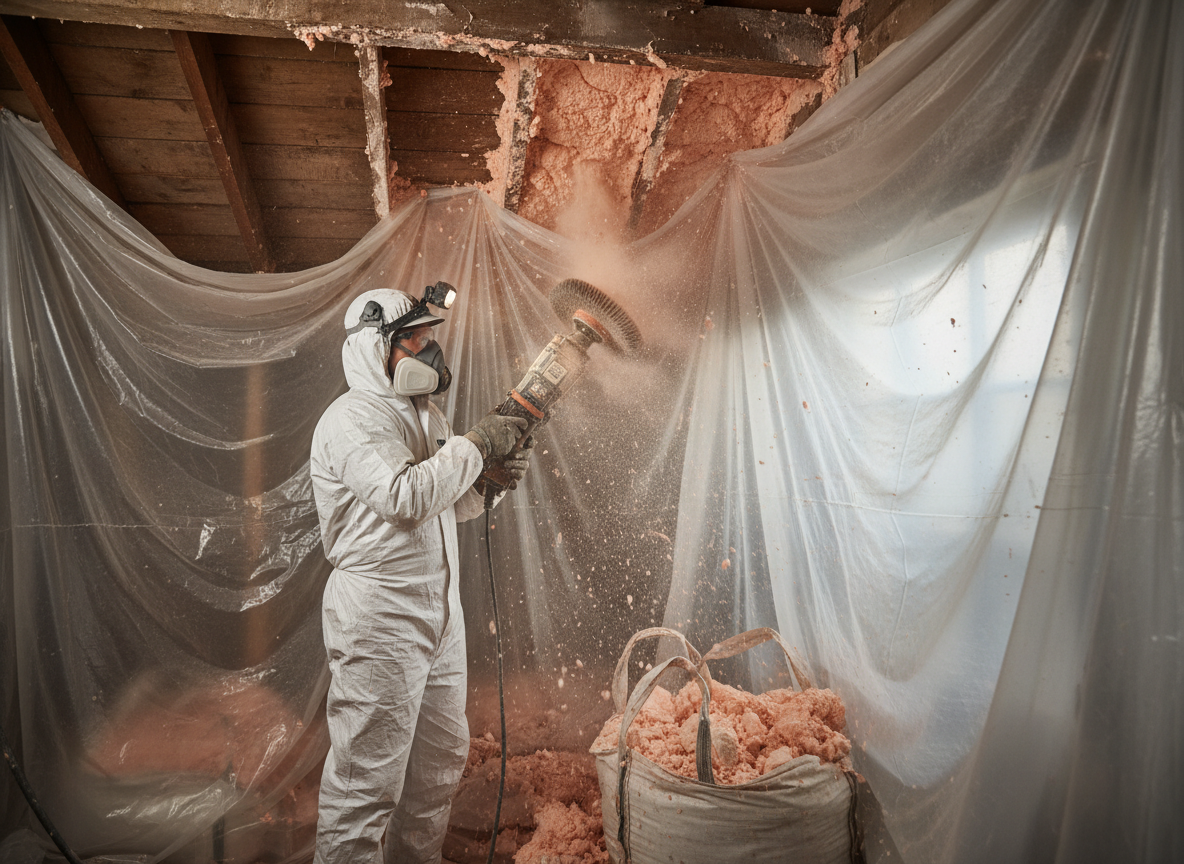
Closed cell spray foam bonds tightly to rafters and joists in Plymouth's Victorian and Edwardian terraces, especially those around Mutley and Stonehouse. Removing it requires cutting back in controlled sections rather than pulling, because the foam often pulls timber fibres with it and can loosen original lath and plaster ceilings. Coastal humidity and frequent winter rain mean any remaining moisture trapped behind the foam must be dried out before new insulation goes in, otherwise mould returns within months.
Plymouth's post-war council houses and naval quarters often have limited loft access and low roof pitches. Closed cell foam fills these voids completely, so removal teams work from below with dust extraction and temporary propping to protect ceilings. Disposal follows local Devon waste rules; the rigid material cannot be left on site and must be taken to licensed facilities rather than general skips.
Homeowners in Devonport and Keyham frequently discover the foam was applied directly over original felt or sarking boards that have since rotted. The removal process therefore includes checking rafter condition and advising on ventilation upgrades before any replacement insulation is considered. Working in these tight, damp spaces during Plymouth's wet season adds time because surfaces must be fully dry before new materials are introduced.
Technician insight
In Plymouth, the thing that catches most people out with closed cell spray foam removal is the low roof pitches and fragile lath ceilings in Mutley and Stonehouse terraces. Once the rigid foam is cut away, any remaining moisture from our frequent winter rain sits against the timber and you have to allow proper drying time before anything else goes back in.
Damp Loft in Stonehouse Terrace
Closed cell foam had been sprayed over rafters in a 1900s terrace. We found trapped moisture causing ceiling staining below. Removed the foam in sections, ventilated the void and confirmed the rafters had dried before the owner arranged new insulation.
How it works
- 1
Site Assessment
Inspect loft or wall cavities in the Plymouth property to map foam thickness, adhesion points and any hidden timber damage.
- 2
Containment Setup
Seal off living areas with plastic sheeting and negative air units to keep dust from spreading through older terraced homes.
- 3
Foam Extraction
Cut and remove closed cell foam in sections using specialist tools while supporting joists and ceilings common in Plymouth stock.
- 4
Cleanup and Disposal
Vacuum residues, treat affected timber if needed, and remove all waste to licensed Devon facilities.
Pricing
Cost varies with property age, loft access and foam depth; Plymouth terraces often require extra time for careful ceiling protection.