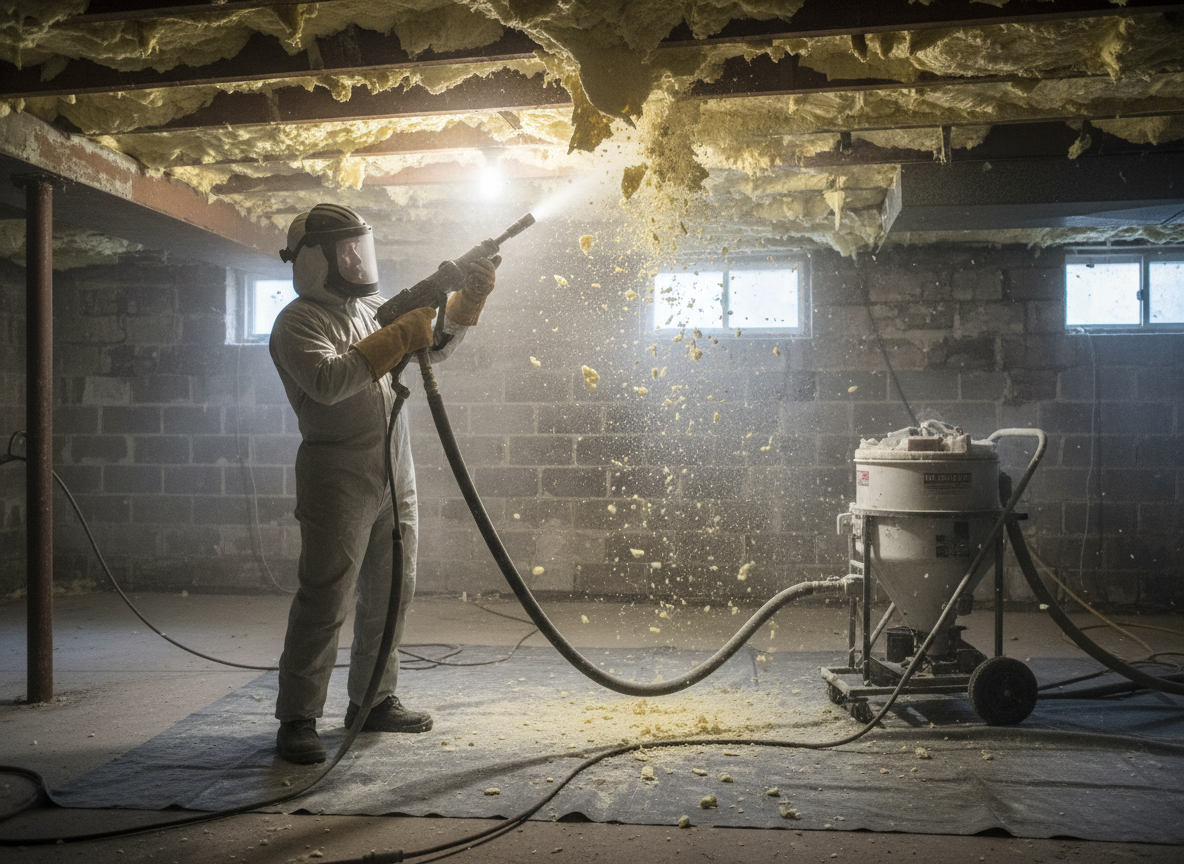
Plymouth's older terraced and stone-built homes, particularly those in areas like Stonehouse and Mutley, often received spray foam insulation in lofts during the 1990s and early 2000s. Over time the closed-cell material traps moisture from the city's frequent rain and salt-laden air, leading to timber decay and reduced ventilation. Dry ice blasting uses solid CO2 pellets accelerated at high velocity to break the foam bond without scraping or solvents that could harm historic lath and plaster ceilings below.
The process suits Plymouth's variable coastal weather because it leaves no liquid residue that could soak into already damp roof voids. Operators must account for tight access in Victorian terraces where joist spacing is irregular and electrical wiring runs close to the insulation layer. Edge cases include foam applied over original mineral wool in post-war council stock around Southway, where layered materials require staged blasting passes to avoid dislodging ceiling fixings.
Local building practices in Devon mean many roofs lack modern vapour barriers, so removal crews check for hidden condensation points before starting. The method complies with current UK waste regulations by converting the foam to manageable pellets that are vacuumed away rather than left as airborne particles in residential streets.
Handling Coastal Moisture During Removal
Plymouth's mild but persistently wet winters mean any exposed roof timbers must be assessed for rot immediately after foam clearance. Crews working from the Mayflower Street base carry portable dehumidifiers to stabilise lofts before homeowners arrange replacement insulation.
Technician insight
In Plymouth, the thing that catches most people out with dry ice blasting spray foam removal is how quickly coastal damp in older stone terraces around the Hoe turns trapped moisture into rot once the foam is stripped; many owners assume the void will dry on its own but the mild wet winters here keep humidity high for months.
Loft Clearance in a Mutley Terrace
Homeowners noticed musty smells and peeling ceiling paint in their 1890s terrace. Inspection revealed spray foam sealing the rafters and trapping rainwater ingress common to the street. Dry ice blasting lifted the material cleanly, exposing two decayed joist ends that were then treated before the void was left ventilated.
How it works
- 1
Initial Loft Inspection
Access the roof void through existing hatches or temporary openings to map foam coverage, wiring routes and any visible timber issues common in Plymouth terraces.
- 2
Site Protection Setup
Seal floor areas and stairwells with sheeting while establishing ventilation paths to manage CO2 release in enclosed spaces.
- 3
Dry Ice Blasting Application
Direct pellets at controlled angles to lift foam from rafters and between joists without disturbing original plasterwork below.
- 4
Debris Extraction and Disposal
Vacuum all residue and transport waste to licensed facilities in line with Devon waste handling rules.
- 5
Final Ventilation Check
Confirm restored airflow and advise on next steps for re-insulation suited to the property's age and exposure.
Pricing
Pricing depends on roof size, foam thickness, access difficulty and whether multiple visits are needed for layered installations; we issue a clear written quote after the site visit.