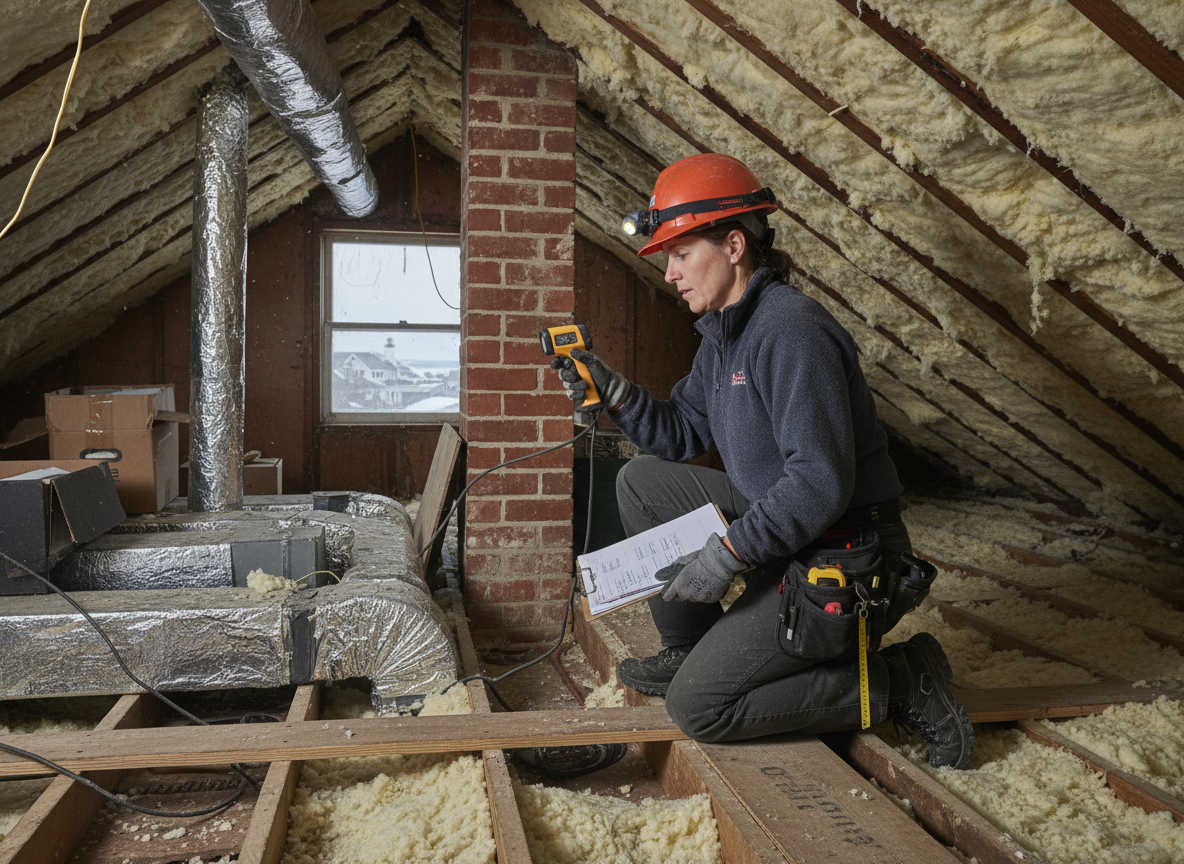
Plymouth's housing stock includes many Victorian and Edwardian terraces in neighbourhoods such as Stonehouse, Mutley and Devonport. These solid-wall properties often received spray foam insulation decades ago, and the region's frequent heavy rain plus salt-laden coastal air can trap moisture behind the foam. An insulation assessment checks for hidden damp, checks loft and wall cavities, and notes how the foam bonds to original lath or plaster before any removal starts.
Assessors look at ventilation paths, roof pitch and gutter condition because blocked downpipes on terraced roofs in Plymouth commonly push water into foam edges. They also test for timber decay in older floor joists where foam was applied directly to the underside. The process records exact foam thickness and adhesion points so removal crews know which sections will need extra care to avoid damaging original ceilings or cornices common in Devonport homes.
Local building regulations in the Plymouth area require that any insulation disturbance in pre-1919 properties must not worsen existing damp. The assessment produces a written report noting these constraints and suggests whether ventilation upgrades or targeted drying will be needed after foam is taken out. This prevents callbacks when winter storms return and reveals whether neighbouring properties share party-wall foam that could affect the job.
Edge cases include foam applied over existing mineral wool in 1960s council stock around Southway, where delamination creates hidden voids. Assessors use moisture meters and borescopes rather than relying on surface appearance alone.
Technician insight
In Plymouth, the thing that catches most people out with insulation assessment is how quickly foam hides rising damp in the stone terraces around Stonehouse and Devonport once the winter gales drive rain against the walls.
Mutley Terrace Assessment
Homeowner noticed musty smells in the front bedroom of a 1890s terrace. Assessment found spray foam applied directly to the rear wall had trapped water from a blocked gutter, causing joist decay. Report detailed the extent and recommended targeted drying before removal. Foam was later removed without damage to original cornice work.
How it works
- 1
Initial Site Walkthrough
Inspect every accessible loft, wall and underfloor space to locate all foam areas and note visible staining or sagging.
- 2
Moisture and Adhesion Testing
Use meters and probes to measure damp levels behind the foam and test how firmly it is bonded to original surfaces.
- 3
Report and Recommendations
Produce a written summary with photos, risk ratings and a removal sequence tailored to the property's age and layout.
- 4
Follow-Up Discussion
Explain findings on site and answer questions about timing, access and any ventilation work needed after removal.
Pricing
Upfront quote provided after the assessment visit; no fixed prices until the property is seen.