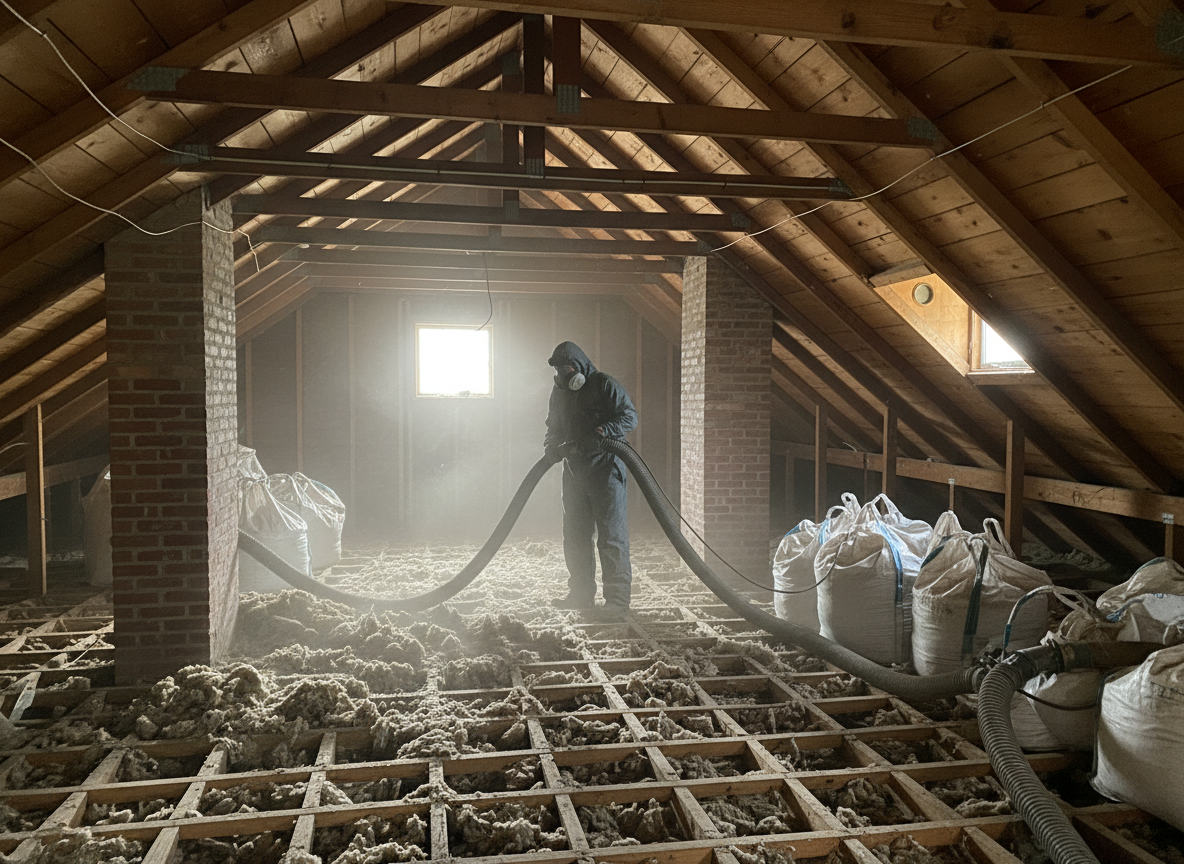
Plymouth's older housing stock, particularly Victorian terraces and post-war semis in areas like Mutley, Lipson and Devonport, frequently contains sprayed polyurethane foam that has absorbed water from the region's persistent rainfall. Removing it requires careful cutting and vacuum extraction to avoid damaging original lath and plaster or exposing timber frames to further damp. Homeowners in these properties often discover the material has trapped condensation against stone walls, leading to hidden rot that only becomes visible once the foam is stripped back.
The mild but very wet Plymouth climate means insulation removal jobs peak after prolonged winter rain when loft spaces and cavity walls show staining or musty smells. Crews working from the Mayflower Street base can reach most central Plymouth addresses quickly, but jobs in outlying villages like Plympton or Plymstock often involve longer material haulage and restricted parking on narrow terraced streets. Proper disposal at licensed Devon sites is essential because cured foam cannot go into standard skips.
Access limitations in Plymouth's many converted naval properties and listed buildings add complexity; narrow loft hatches and shared chimney stacks require sectional removal rather than large-sheet pulling. Technicians must also check for asbestos in older artex ceilings before disturbing foam layers. Each job includes sealing any resulting gaps to prevent new moisture ingress once the insulation is gone.
Technician insight
In Plymouth, the thing that catches most people out with insulation removal service is how quickly foam in older stone terraces soaks up rain from our westerly storms; once it saturates the cavities it sticks like glue to the masonry and you end up doing twice the cutting work compared with a dry job inland.
Lipson Terrace Loft Clearance
Homeowner in a 1900s Lipson terrace noticed black mould spreading across bedroom ceilings after heavy autumn rain. Inspection revealed spray foam in the loft had trapped moisture against the slate roof. We cut and vacuumed the saturated foam in sections, removed it to a licensed site, and left the rafters exposed for drying. The client later installed breathable insulation instead.
How it works
- 1
Site Assessment
Inspect loft, cavities and wall sections to identify foam type, depth and any hidden moisture damage.
- 2
Protection and Containment
Seal off living areas, lay floor protection and set up dust extraction to contain debris during cutting.
- 3
Mechanical Removal
Cut and peel foam in sections, using specialist vacuums to clear residue from joists and masonry.
- 4
Waste Removal and Disposal
Load all material into covered vehicles for transport to licensed Devon recycling or landfill facilities.
- 5
Final Check and Advice
Inspect exposed surfaces, advise on ventilation improvements and any follow-up damp treatment.
Pricing
Cost depends on property age, foam depth, access restrictions and volume removed; most Plymouth jobs are quoted after inspection.