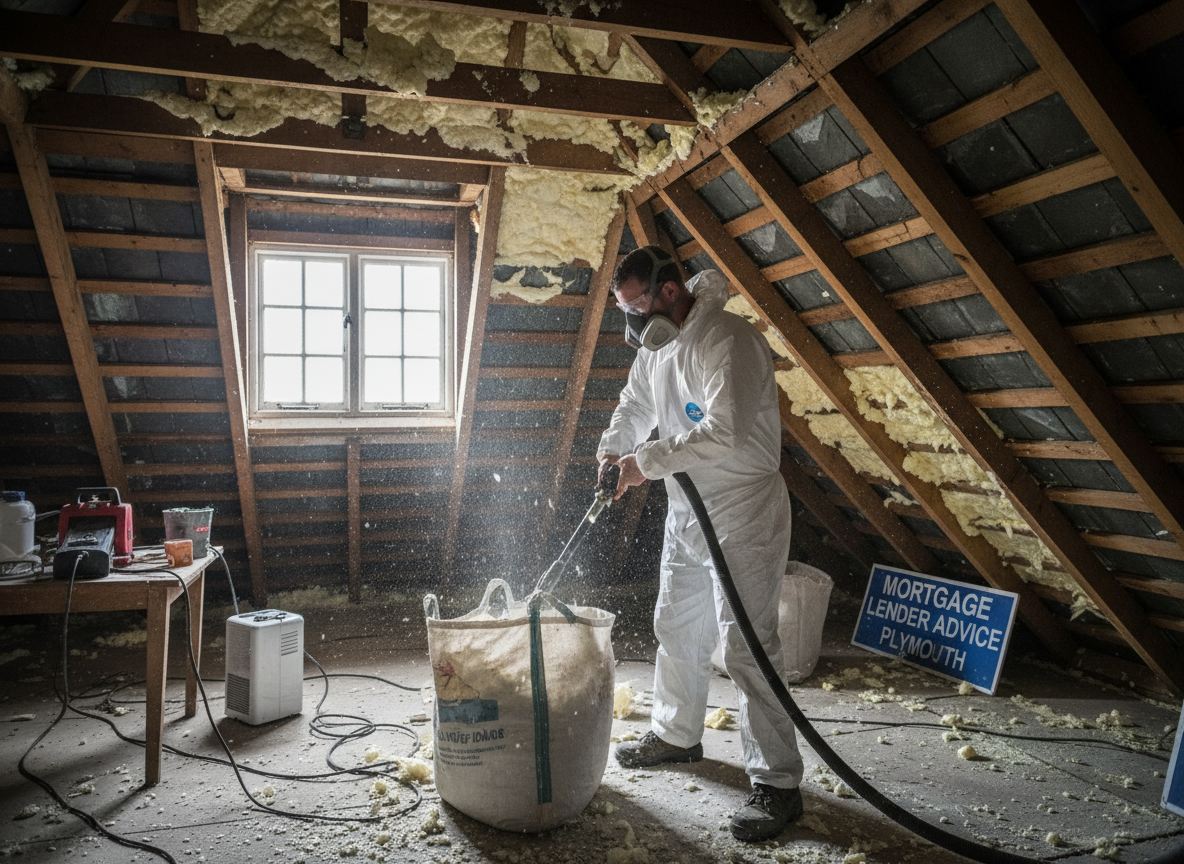
Mortgage lenders in the Plymouth area frequently flag closed-cell spray foam in lofts because it traps moisture against rafters in the region's high-rainfall climate. Properties built before 1950, common in neighbourhoods such as Mutley, Lipson and the Barbican, often have original timber that has already absorbed salt-laden air from the Sound. Removing the foam requires cutting it back in sections without damaging the felt or battens, then clearing every trace of residue so surveyors can confirm ventilation paths are restored.
Edge cases appear regularly in Plymouth terraces where foam was applied over electrical cables or around chimney breasts. The work must stop short of disturbing lead flashings on slate roofs that are typical on streets near the Hoe. Once the foam is out, the loft needs several days of natural airflow before a follow-up inspection; the damp south-westerly winds that hit Devon can slow drying if the property faces the prevailing weather.
Regulation notes matter here because many Plymouth lenders now require photographic evidence that the foam has been fully removed and the roof structure left clean. Homeowners sometimes attempt partial removal themselves, leaving thin layers that later cause the valuation to fail again. Full extraction also includes bagging and licensed disposal of the material, which cannot be skipped if the mortgage offer is to proceed without conditions.
Homeowners in Plymouth should check the original foam type before booking; open-cell foam is easier to strip than closed-cell but still blocks lending on older stock. The job changes when the property sits on a slope, as gravity can pull loose debris into wall cavities below. Clear access through the hatch and safe working platforms are essential on narrow loft spaces found in Victorian terraces around North Road.
Technician insight
In Plymouth, the thing that catches most people out with mortgage lender spray foam removal is the way salt-laden air from the Hoe has already penetrated the brickwork of pre-war terraces; any foam left in the eaves keeps that moisture trapped and the surveyor will fail the valuation.
Stonehouse Terrace Mortgage Hold
A 1930s mid-terrace in Stonehouse failed its valuation because closed-cell foam filled the entire loft. Inspection showed the foam had bridged the eaves vents and trapped condensation against the rafters. We removed the foam in sections, cleared residue from every timber face and opened the vents fully. The lender released the mortgage once the photographic report confirmed clear airflow paths.
How it works
- 1
Initial Loft Inspection
Assess foam depth, coverage and any hidden services using torches and moisture meters.
- 2
Sectional Removal
Cut and peel foam in manageable pieces while protecting rafters and wiring.
- 3
Residue Clearance
Scrape and vacuum all remaining material until timber is clean and visible.
- 4
Ventilation Check
Confirm eaves and ridge vents are unobstructed for lender sign-off.
- 5
Documentation Handover
Provide dated photos and a summary report for the mortgage surveyor.
Pricing
Pricing depends on loft size, foam thickness and access difficulty; quotes are provided after inspection.